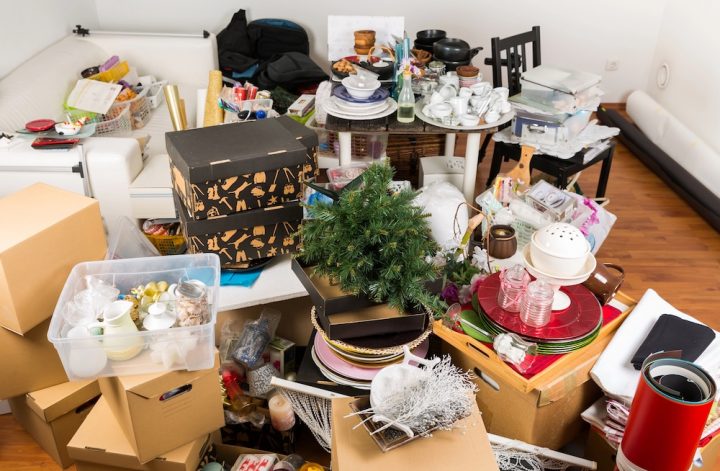
We know that unfinished projects count as clutter, and one great way to eliminate that clutter is to go on a finishing spree.
What is a Finishing Spree?
A finishing spree is just what it sounds like: dedicated time where you focus on finishing projects that have been lingering.
It can also just be a time where you go through your stockpile of unfinished things and evaluate whether you want to finish them at all or what to do with them. That’s part of planning your finishing sprint.
Getting Ready to Finish
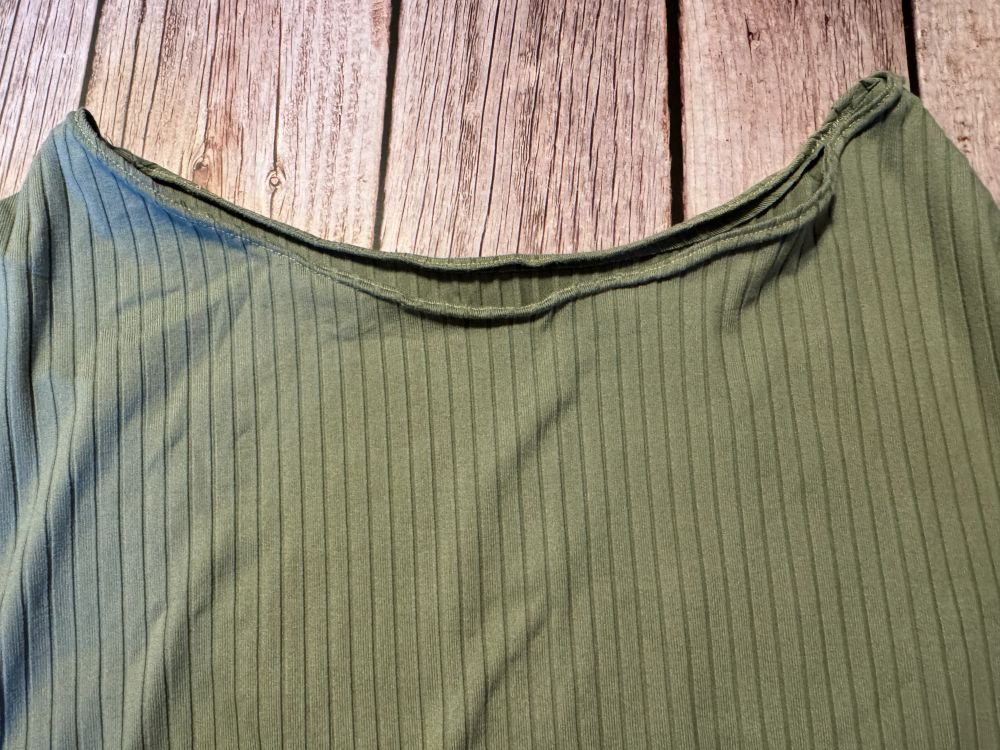
The first step for planning a finishing spree, then, is to gather all the unfinished objects you can find.
If you do a lot of different kinds of crafts, you might want to do this one craft at a time and set aside, say, one week to work on knitting projects, one for sewing projects and so on.
Which is not to say that all the projects can or will be done in a week, just that you’ll commit to working on those particular things in that time period.
Once you have your projects gathered, consider them:
- Is this something you really want to finish?
- What still needs doing?
- How long will it take?
- How excited am I to have this thing be finished?
Set aside the things you don’t want to finish; we can evaluate those further later.
Arranging Projects by Time
My favorite way to work when I’m doing a finishing sprint is to start with the projects that are closest to being done.
Sometimes I’ll abandon a project when there’s only a little bit of work left, like knitting the button band or neck ribbing on a sweater, finishing sleeves or figuring out why the neckline on that dress I was sewing came out so wonky.
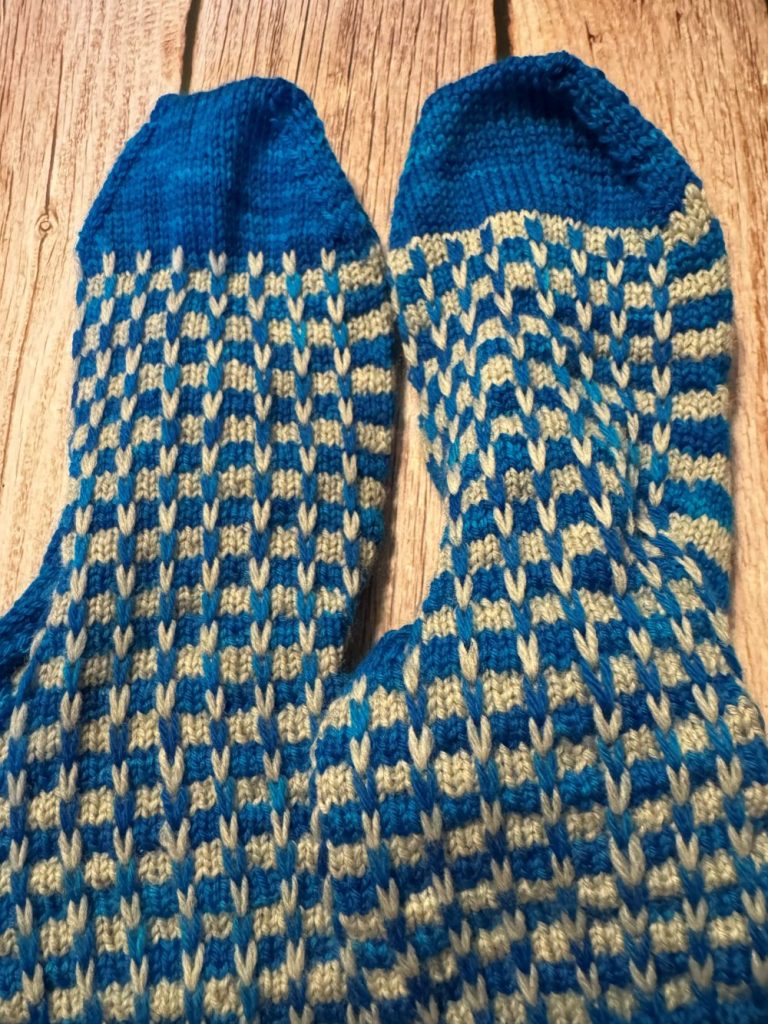
One “unfinished” project I have right now is a sock that doesn’t match its partner (I started the toe shaping one pattern repeat too early) so all I need to do is rip the toe out, knit four more rounds and then knit the toe again. It might be an hour or two of work and then I’d be able to wear these socks that I love. I’ve been putting it off for *checks notes* about three months.
Sometimes we write what we most need to hear.
Another one that had been lingering for years until recently was a painting I wanted to add a flower design to. I’m not a painter, and I already had to paint over it once because I didn’t like it, but once I did it, it took 10 minutes and I could finally stop thinking about it. It might not be exactly what I envisioned, but it’s done and that’s the best possible thing.
For me, starting with something I can finish the same day or over the weekend or whatever relatively short period of time is just the thing I need to build momentum to finish other things.
Start with the Thing You Want
Another approach is to start with the project that excites you most. That could be the same thing, if you’re close to being done with something that can bring a spark of excitement to finish it.
Maybe looking through your unfinished objects you’ll remember how excited you were to make that thing, or how fun the technique was, or that it’s the perfect gift for someone or thing to wear to some upcoming gathering.
Use that feeling to motivate you to begin your finishing spree.
I guess you could also use this the other way, but I don’t recommend hate finishing projects. If you don’t like it, you won’t use it, so please move that to the permanently unfinished pile for further evaluation.
Evaluate By Age
One other way I can think to organize projects for finishing is by age of the project, either starting with the oldest or the newest.
Sometimes it can be really satisfying to think “that project was lingering for 10 year and now it’s finally done!” (Been there.) Or it may be that the newer projects still hold more interest and excitement for you so that’s a better place to start.
Whichever way you sort your projects, it is good to have some sort of plan before you start your sprint.
Working a Finishing Spree
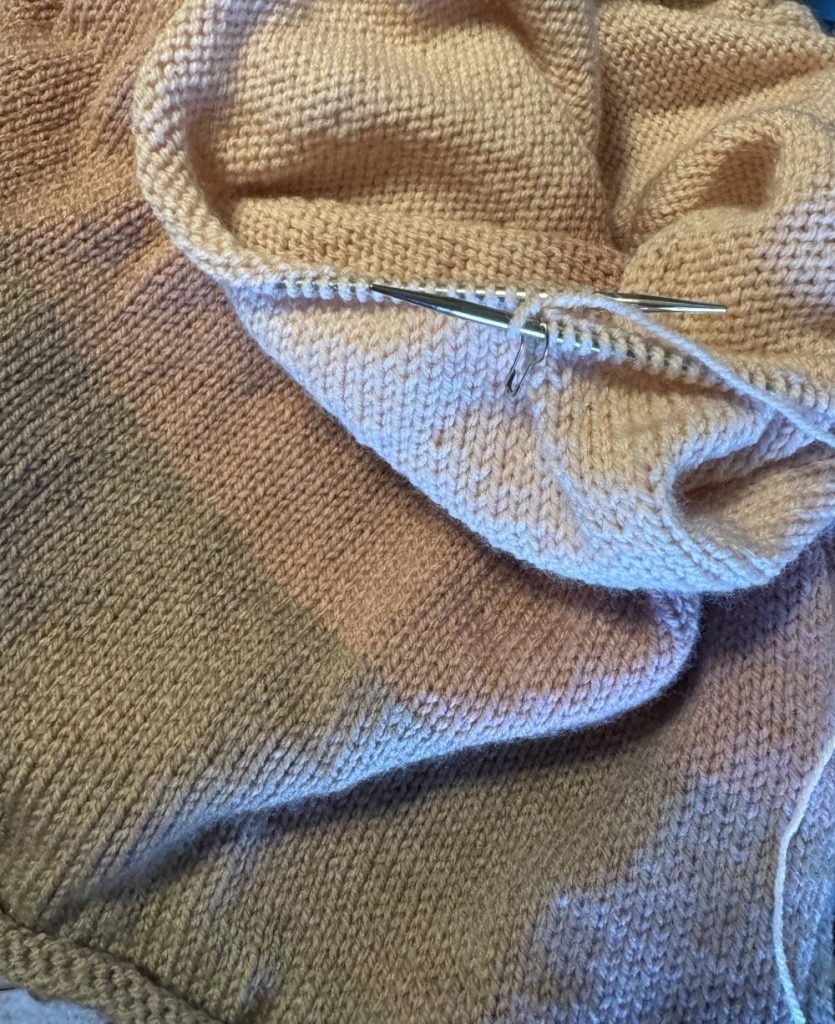
The key to a finishing spree, of course, is actually doing it. And while we don’t want any projects we are currently working on to turn into unfinished objects, it’s important to work some of these unfinished projects into your daily routine.
The way I like to do it is to work on one project a day. Again that doesn’t mean it will necessarily be done in a day, just that I know I’ll work on that sweater today and this cross stitch project tomorrow and that sewing thing the next day and then finish that collage. Or whatever.
I like rotating through projects (I do this with my on-the-go projects a lot too) because it feels good to be making progress on multiple things.
Of course if some things are pretty close to done but not done in a day, working on the same project until it’s done is also a fine idea.
You probably know what works best for you.
And once you’ve got a plan: start.
Today. Really.
Evaluating Projects You Don’t Want to Finish
If you found things in your unfinished object stash you aren’t sure about, or that you are sure you don’t want to finish, now’s the time to give them a little more though.
If you’re on the fence about something, what would convince you one way or the other to finish or not?
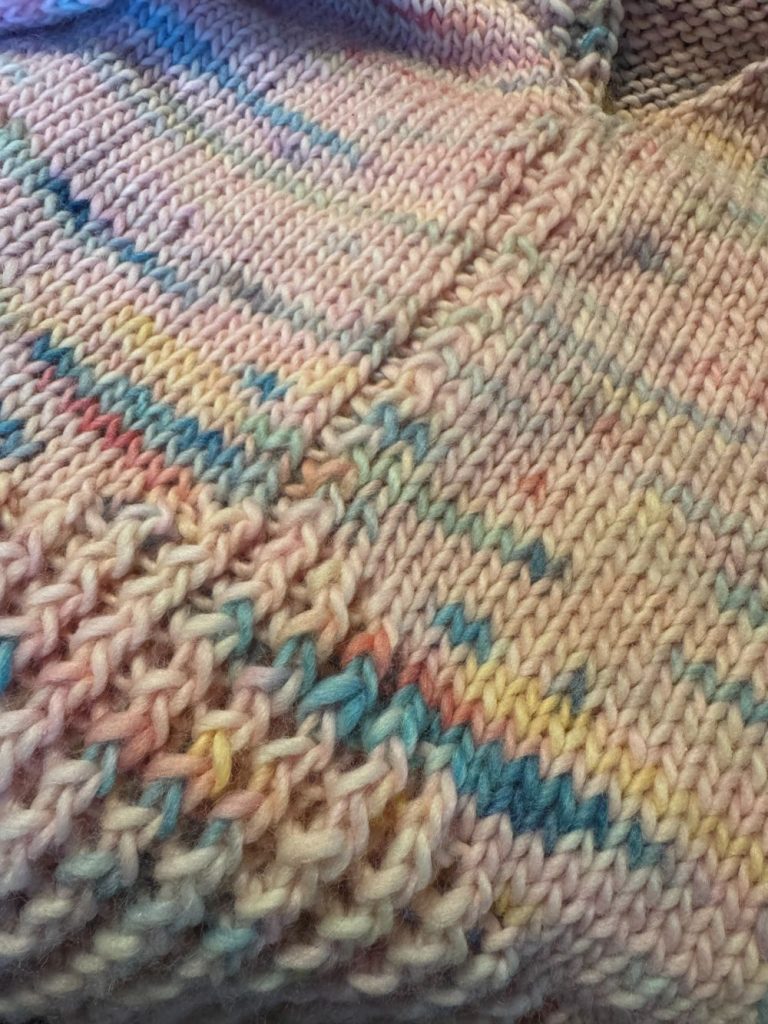
Example: I have this sweater that’s completely done other than the neckline but I either did a stitch wrong or it looks funky in the yarn I chose. I think it might block out OK but I don’t really know, and I don’t want to finish it if it’s not going to work.
Instead of just washing it and seeing what happens, it’s been in time out for a couple of years. So this needs to move to the top of my list because if I just did it I’d have my answer today.
Maybe you need a tool or supply that you don’t have in order to finish something. If you think it would be worth it to do if you had everything you needed, go ahead and buy that thing if you can (or check out my post on ways to get craft supplies without big box stores; you might not even have to buy it).
There are some projects that are just duds. The baby blanket you were making for the baby who is now a teen (though if you like it you could finish it and donate it somewhere). The pants you started sewing but they don’t actually fit. The trendy design idea you didn’t really like anyway.
When you come across these kinds of projects, you need to decide what to do with them that will keep them from being in limbo. If it’s a knitting or crochet project, you can unravel the yarn (and wash it if you need to before making something new).
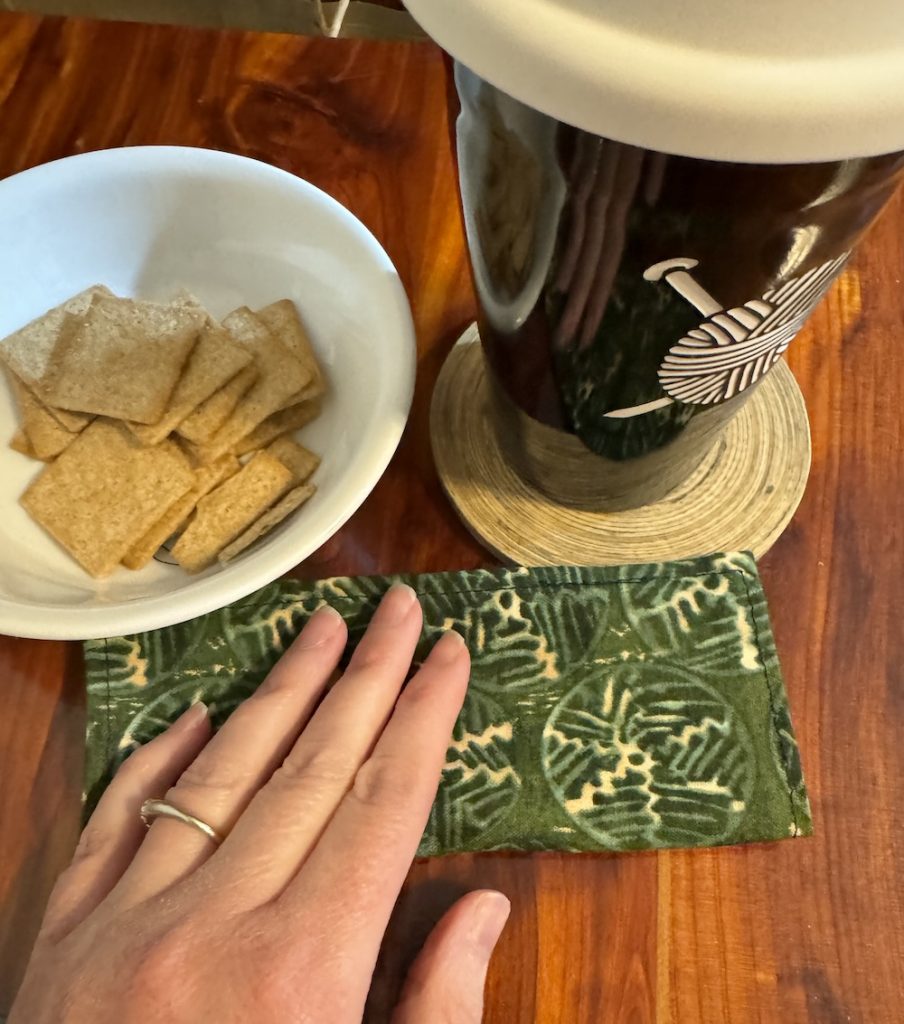
For sewing projects, if you like the fabric, is it usable for something else? I once turned some too-small shorts into a bunch of little cloth napkins.
Abandoned cross stitch could be ripped out, but you have my permission to just trash it if you know you’re not the sort of person who will sit and rip out cross stitching.
For paper crafts, painting, woodworking, beading, candle making and the like: are there elements you like, can keep or reuse? Could you gesso over a painting you don’t like, harvest the beads, melt the wax? If so, do that and get rid of the rest in the most sustainable way possible.
And remember, this is not meant to make you feel guilty about all the things you haven’t finished, or that you don’t want to finish. Craft supplies hold energy and letting go of that dead weight through a finishing spree and getting rid of things you’re never going to finish will do wonders for your creative energy (not to mention your crafting space).
Have you ever done a finishing sprint? I’d love to know how it went for you!