Trends in decluttering come and go like in everything else, and reverse decluttering seems to be having a moment. Let’s look at what it is and how to reverse declutter your spaces.
How Decluttering Usually Works
If you’ve ever read a book or watched a show about decluttering, or even just tried to do it on your own, you probably know how it usually goes:
Step One: gather all your like “things,” whether books, clothes or something else, or completely empty a space, like your closet.
Step Two: go through each thing one by one (actually holding each thing if you’re doing Marie Kondo style) and decide what you want to get rid of.
Step Three: get totally overwhemled and have to move all the piles of clothes off your bed so you have a place to sleep.
What This Method Gets Wrong
One of the reasons this traditionally decluttering approach is so difficult is that focus on things you want to get rid of.
When all your stuff is in front of you, this tends to go one of two ways.
You’re so overwhelmed by it all that you throw up your hands and say “just get rid of it all” or “I just want to keep it all” to avoid having to make any decisions. (This is common when dealing with other people’s stuff.)
Or, when you see all the stuff piled up it makes you start to feel guilty because you think about the waste. All the things you spent money on but didn’t use, the clothes you’re still hanging onto even though they haven’t fit in years. The supplies for hobbies you thought you’d love but didn’t even try.
Of course this gets into the sunk cost fallacy, where we give value to things just because we spent money on them. But that money is gone, and keeping a thing forever doesn’t get it back.
I like to think of decluttering as allowing things to find their rightful home, which is not with me. That makes it a little easier to let go. But if traditional decluttering doesn’t work for you, maybe reverse decluttering is a better approach for you.
What is Reverse Decluttering?
Reverse decluttering is still done generally the same way as regular decluttering, but with a little twist.
Instead of thinking about what you want to get rid of, focus on what you want to keep.
So you’re still starting with a whole set of “things,” whether that’s your pots and pans or the contents of your bathroom drawers.
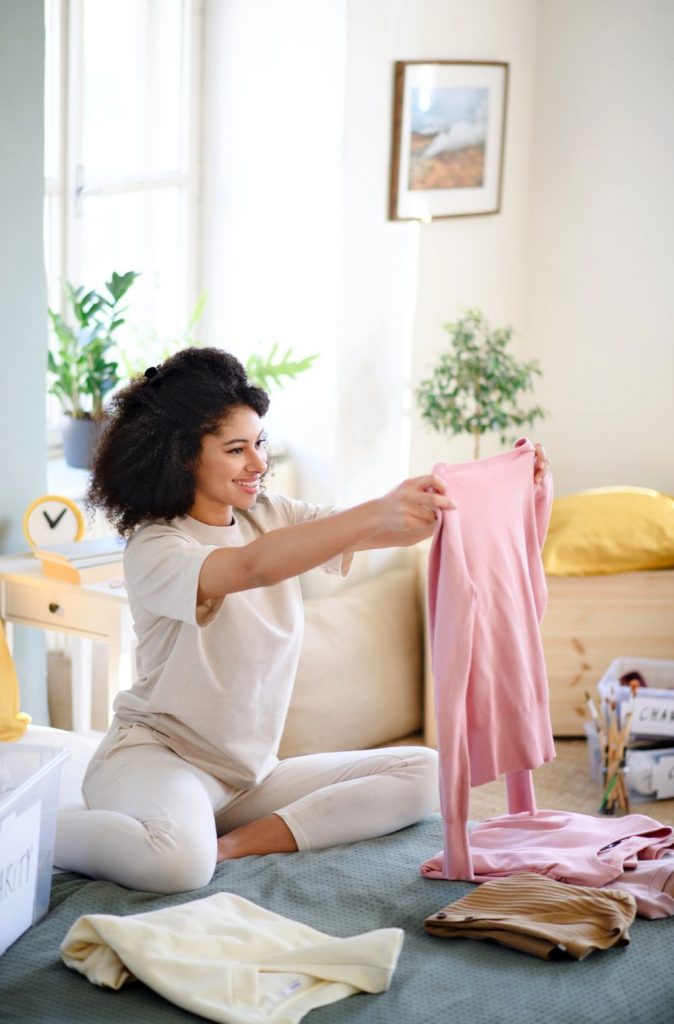
But instead of going through everything seemingly at random, first pull out the things you know you use. Those are definite keepers.
Once you have those things set aside (and ideally put away in their proper place) you can evaluate the rest in terms of what you want to keep.
This little shift that makes it reverse decluttering makes it easier for some people because keeping is a more positive emotion than getting rid of things. It ties into looking for things that spark joy, that make you smile or that you know to be useful. Things that don’t fall into those categories don’t go into the keep section.
What’s left can go away.
The Rules of Reverse Decluttering
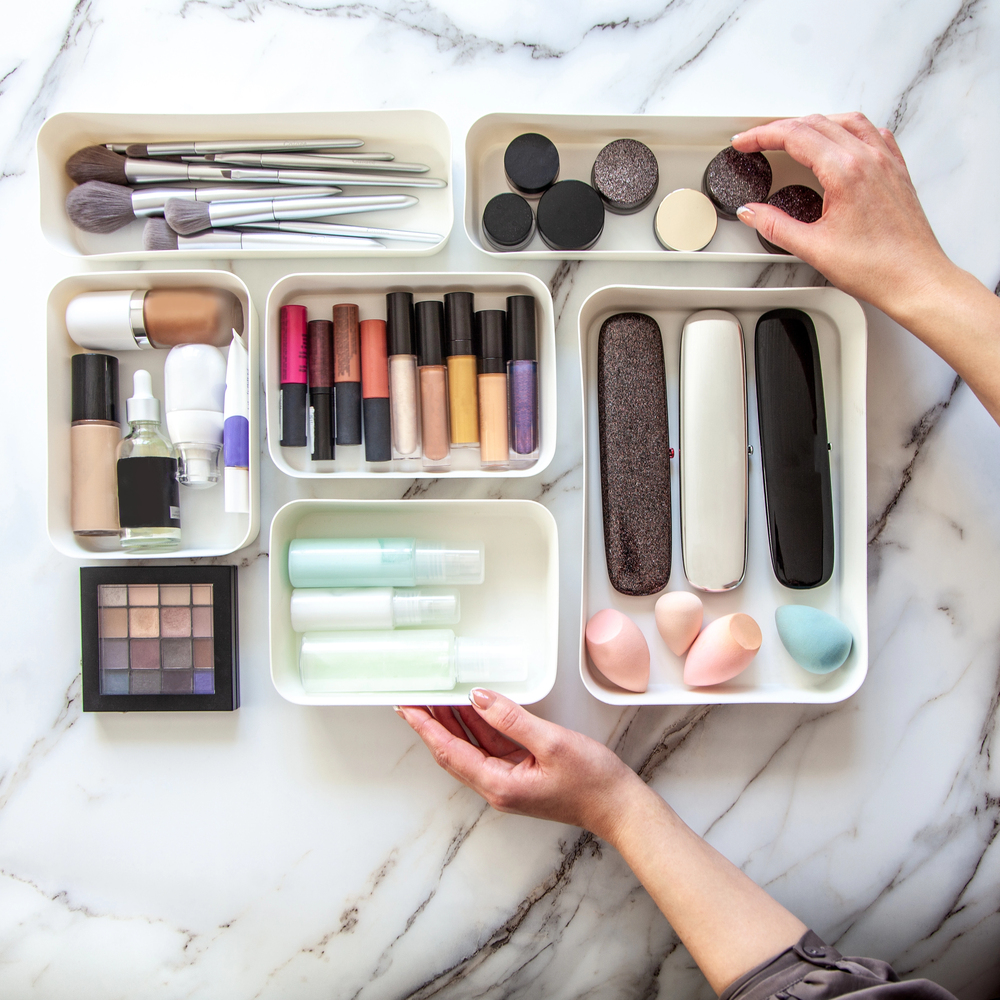
If you want to try to reverse declutter a space, try it out somewhere small first. It could be one section of your kitchen or one category of clothing, for example.
Step One: Put everything in one place. It still is helpful to see everything and to have a clear place to put the things you choose to keep.
Step Two: Pull out the things you already know you use and love. These easy yeses give you momentum, keep it positive, and show you how much space you have left for things that aren’t an immediate yes.
Step Three: Decide what to keep of what’s left. What else do you use regularly even if it wasn’t an immediate yes? If you have multiples, how many do you realistically need? Would you keep this if you were moving, or would you buy it now?
Step Four: Evaluate further by deciding where each thing’s “home” is. If you still have too much stuff to fit in that drawer or cabinet, more things need to go.
More tips/rules for reverse decluttering:
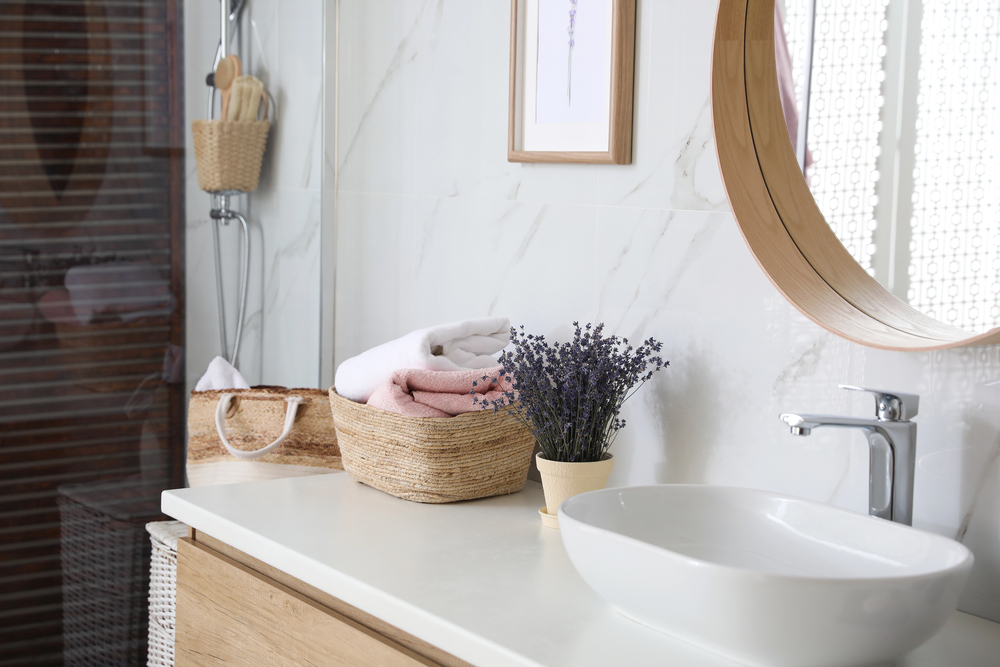
- Start with a small space or a single kind of thing to avoid overwhelm. Just the T-shirt drawer, not the whole dresser. The bathroom counter is a great place to start.
- Set aside your daily use/favorite things and put them in the most accessible/logical place.
- Evaluate other things based on what you like/use/want to keep rather than what you want to get rid of.
- If you still have too much stuff for the space, try to eliminate duplicates (or store them elsewhere if you know you’ll use them) and use a one in-one out method in the future so your space doesn’t overfill.
- Do a regular reset to put things back in their places and re-evaluate what you are actually using and whether you still want to keep all the things you selected.
Reverse Declutter Methods for Crafters
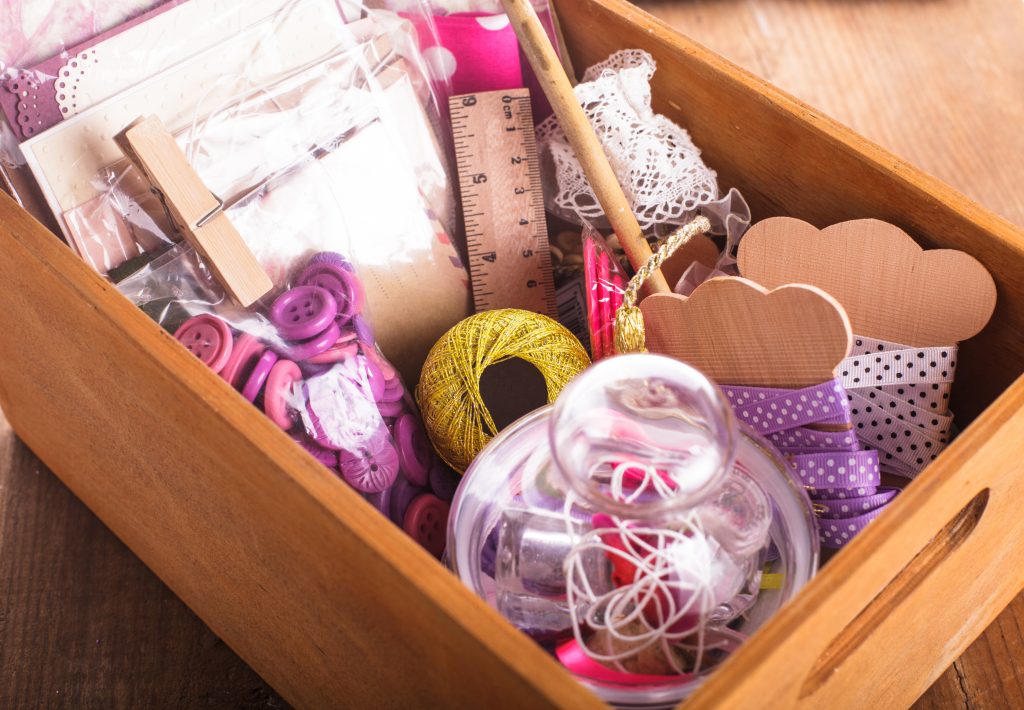
I feel like a lot of common decluttering methods don’t apply well to craft supplies or the equipment used for most hobbies. You’re not, for example, actively using every color of embroidery floss you own (though having the whole rainbow may indeed bring you joy).
Having a ton of fabric is a comfort, but can cause problems if you don’t have a good way to store it, or there’s so much you can’t find what you want when you want it.
Of course “do I like this?” and “would I use this?” are a great baseline for keeping craft supplies. I like the moving game or thinking about if you would buy something again when evaluating craft supplies.
And considering the space you have for stash — that cabinet is for yarn, that shelf can hold scrapbooking supplies — can be helpful because looking at an organized space where you can see everything you have and it’s not all crammed in there is super inspiring.
If you want to try reverse decluttering, start with a space that doesn’t have craft supplies so you get comfortable with how to do it first. Then start with something you don’t have a ton of or a craft you don’t do often, as that might make decisions easier.
With decluttering craft supplies I feel like there’s still an element of deciding what to get rid of instead of just what to keep.
Maybe you hate that color, or you don’t ever reach for that kind of yarn. That fabric has a stain or the baby scrapbook is never going to get made now that the baby is a teen.
In those sorts of cases I feel like it’s still fine to consider letting go a choice instead of just choosing the things you want to keep and leaving the rest behind. I’m the type who likes the feeling of momentum that comes from actively choosing to let things go.
But if saying no to things stresses you out, makes you feel guilt or paralyzes you, reverse decluttering might just be the thing to get you started.