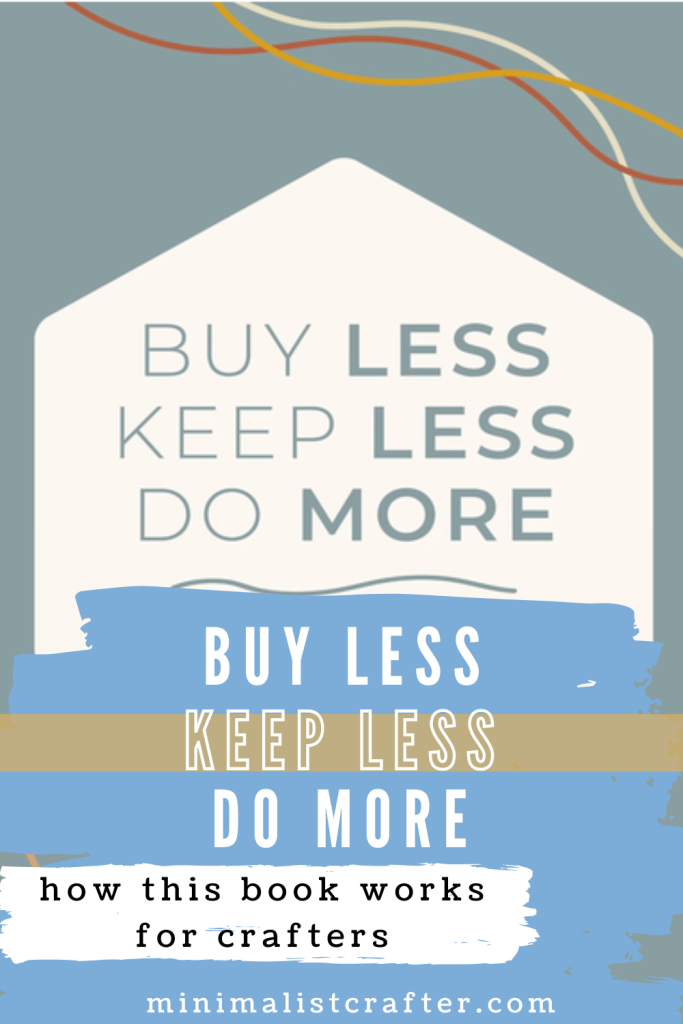
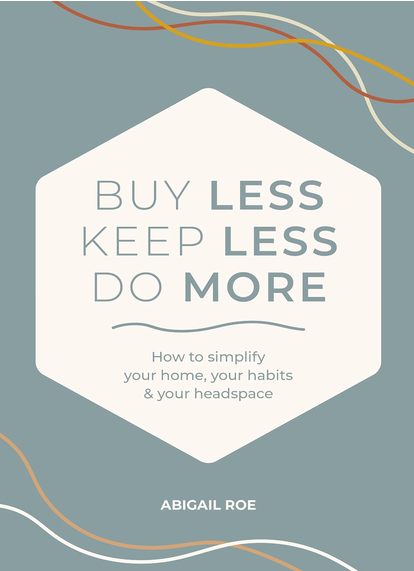
Content creator Abigail Roe of Downsize Upgrade has a simple mantra for the goals of decluttering, which is also the title of her book: Buy Less, Keep Less, Do More.
Buy Less
Though I’d argue a little with the order of the phrasing, it makes sense that any decluttering you do doesn’t really help if you’re still bringing in new things.
This section of the book advises the basics like deleting apps and unsubscribingg to store texts emails, and offers tips on resisting the dopamine hit of buying now and the FOMO around trends and seeing what other people are doing with their spaces.
These aren’t really things I have problems with this, but the recommendations seem pretty standard if buying too much is something you do struggle with.
Keep Less
The meat of the book for someone interested in decluttering is the keep less section, which aims to help you work through your stuff and eliminate what you don’t need.
Again the advice is pretty standard, such as starting small and not trying to tackle too much at once.
One thing I did like in her method is the “doom diamond” (DOOM here stands for “didn’t organize, only moved”), which aims to get you through a small area quickly by physically moving things that need to be dealt with in similar ways so they are together. For example trash is one corner of the diamond, things that need to go somewhere else is another.
Weirdly things to donate isn’t in the diamond, but I guess you could add those to the “action items” section? It’s not clear and I don’t know why that wouldn’t be mentioned.
Do More

If you’re like most people, the idea of doing more might not sound totally appealing, but in this case she means do more in the sense of doing more of what you really want to do with your time and your life.
It’s about saying no to things that don’t serve you and using your time on the right things.
“When we do what matters instead of trying to do everything, our life starts to align with our intentions,” she writes.
We’ve all said yes to things we didn’t really want to do, and rarely take the time to consider what we really want to spend our time on. This section has you look deeply at your environment, health and relationships to evaluate what’s serving you and where things need to change.
Instead of imagining the hypothetical but probably unrealistic perfect day, she asks readers to think of a realistic day. What would you most want to be doing with whom? How would you spend your time? And how can you bring some of that into your life now.
Doing the Work
Each section also includes a checklist or framework to help you consider your choices. For buy less, it’s the deliberation station, which gets you thinking about whether the thing you want to buy is really a need, if you have something else that would work for a problem you might solve with the new thing and whether it supports your priorities.
Keep less offers the think tank, which helps you evaluate what to keep if you’re hesitating on getting rid of something. You’ll consider if you’ve used it lately, where it lives and how much space it takes up, and if someone else would benefit more from having it than you do.
For do more, there’s the two-scale method, which has you think about activities in terms of how much they offer you true productivity (going in the direction you want to go) and joy, and remembering that something high in joy but low in productivity isn’t necessarily a bad thing.
How Buy Less, Keep Less, Do More Works for Crafters
This book doesn’t have anything specific to say about craft supplies, but there are some mindsets considered in the keep less chapter that might apply to decluttering craft supplies such as guilt around getting rid of something expensive, getting rid of things from a previous season in life and those things you might need someday.
We’ve talked about sunk costs and I might need it someday before; not keeping things from a previous season can mean getting rid of the scrapbooking supplies you bought when your now-teen was a baby and you’ve never done anything with, for example.
The hope is that you’ll see that it’s OK to get rid of things without guilt.
And if you’ve heard me talking about stuff having energy, you know I love that question about whether someone else would benefit from having a thing more than I do. If you’re not using things and don’t plan to, letting them go to someone who will is a wonderfully freeing choice.
I wouldn’t say there’s anything earth shattering in Buy Less, Keep Less, Do More, but it’s a quick read that might motivate you to get started on these three pillars and get your space reflecting what you really want your life to be.
Have you read the book? I’d love to hear your thoughts!
About the book: 136 pages, paperback, published 2026 by Verbena, suggested retail price $19.99